Canva is one of the most popular design tools in the world. Millions of people use it to create social media graphics, presentations, posters, and marketing materials.
But when it comes to Canva for artists, the question becomes more complex.
Is Canva actually built for professional art presentation?
Or are artists using a tool designed for something entirely different?
If you’re a painter, photographer, calligrapher, illustrator, or art educator, this distinction matters more than you think.
Because showcasing artwork is not the same as designing a graphic.
What Canva Is Designed For
To understand whether Canva works for artists, we first need to understand what Canva was built to do.
Canva is designed for:
- Marketing visuals
- Social media content
- Business presentations
- Promotional posters
- Brand communication
Its core strength lies in templates. You choose a layout, adjust text, replace images, and quickly produce a polished visual.
This is excellent for communication design.
But artistic presentation is not primarily about communication. It is about context.
And context changes everything.
Why Artists Often Turn to Canva
Many creators search for Canva for artists when trying to build a portfolio quickly:
- It’s accessibl
- It’s affordable
- It’s easy to use
- It produces clean layouts quickly
For emerging artists or students, Canva feels like a convenient solution.
However, convenience does not equal suitability.
When artwork is placed inside a template-driven system, subtle problems begin to appear.
Is Canva for Artists Good Enough for Professional Portfolios?
Templates assume that every visual element serves a communication hierarchy.
But artwork is not a supporting element.
It is the subject.
When using Canva for artists’ portfolios, three structural issues commonly arise:
1. Lack of Spatial Context
Artwork exists in space.
Paintings hang on walls.
Photographs respond to lighting.
Calligraphy requires proportion and breathing room.
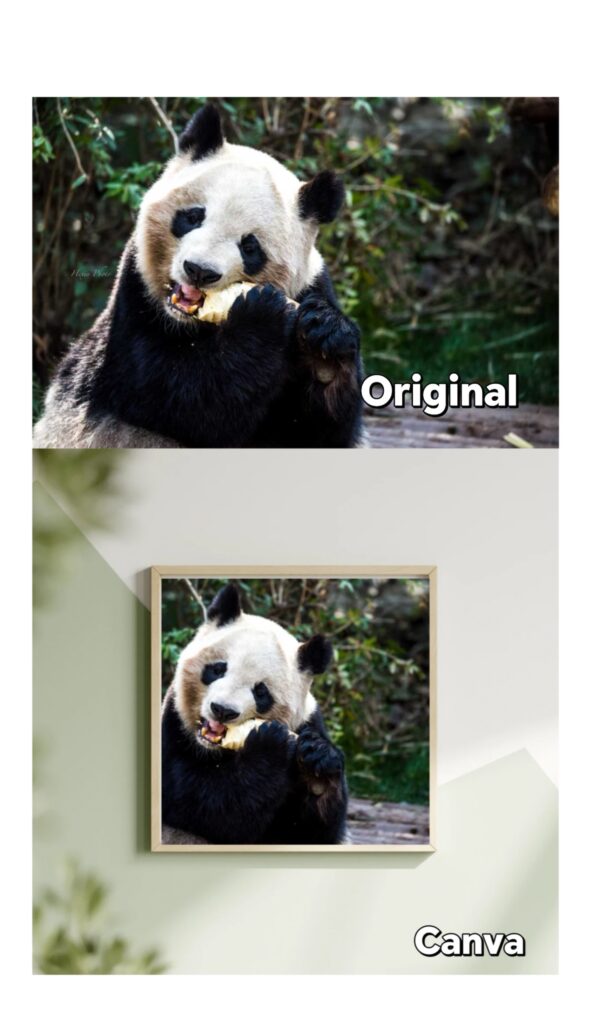
Canva operates in flat design space.
The result?
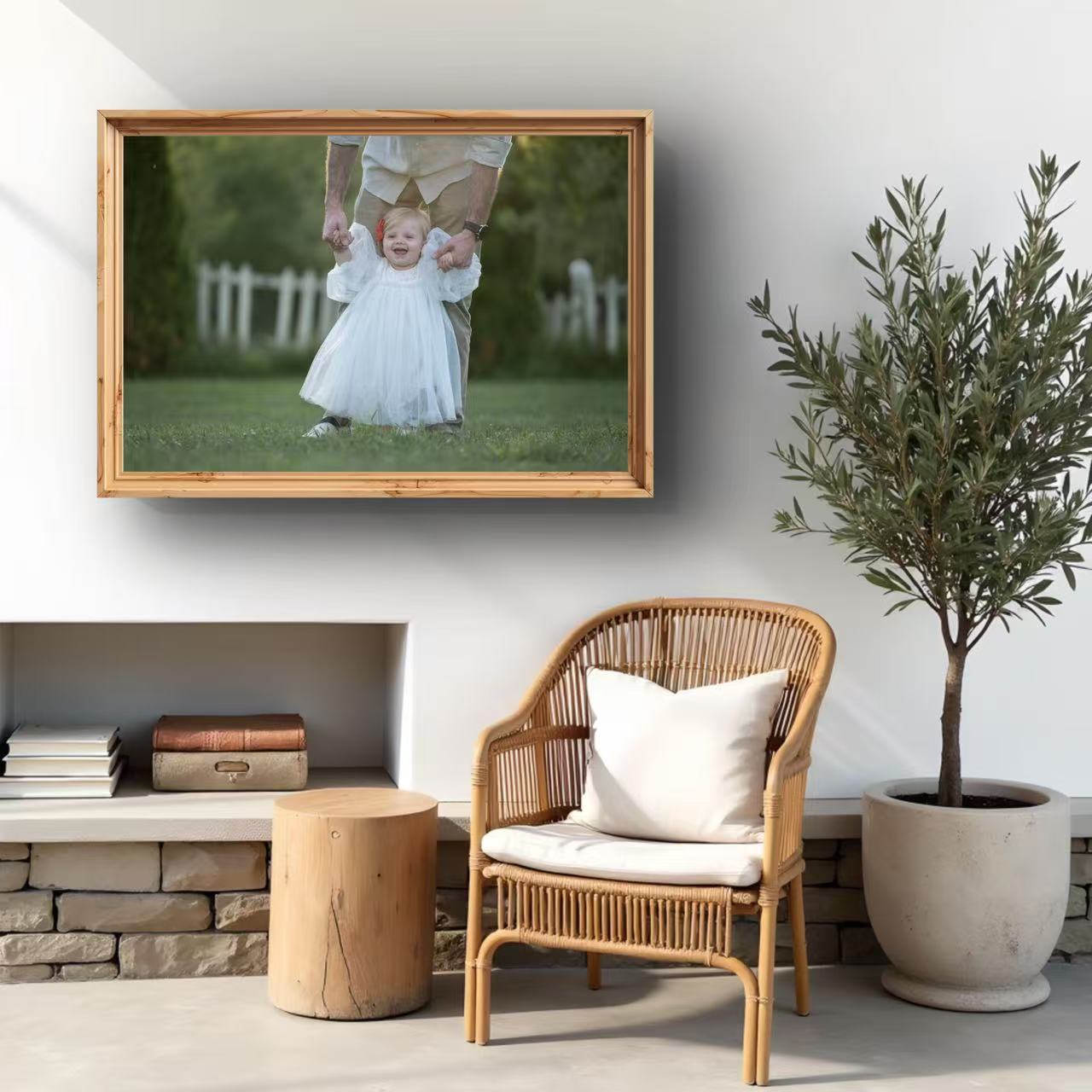
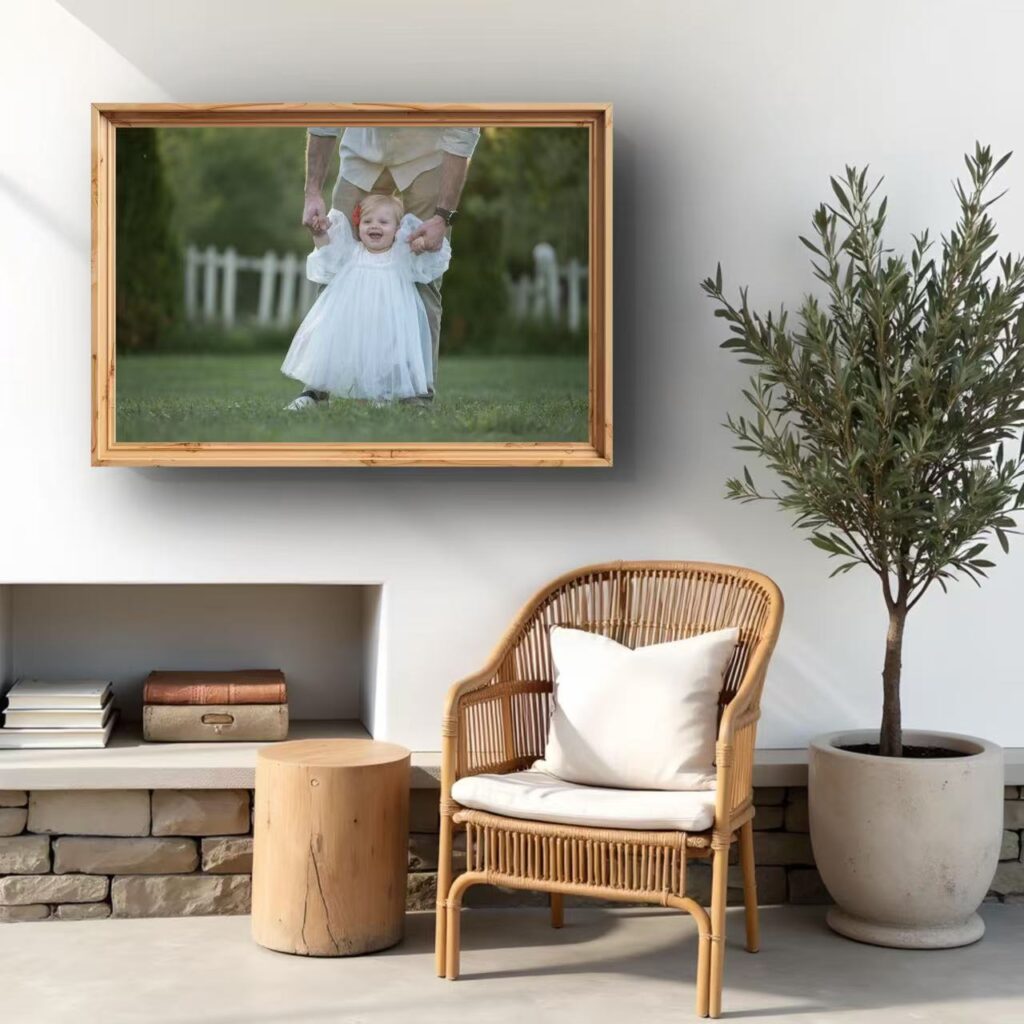
Your artwork becomes an image inside a layout, rather than an object inside an environment.
That shift is subtle—but it changes perception dramatically.
2. No Framing Intelligence
Professional art presentation requires:
- Preserved aspect ratio
- Realistic margins
- Balanced visual weight
- Frame logic
Templates resize elements to fit design balance, not exhibition integrity.
In a marketing poster, resizing is harmless.
In a professional portfolio, it can distort meaning.
3. No Exhibition Narrative
Artists do not simply “post images.”
They build identity.
A strong art portfolio creates:
- Sequence
- Emotional pacing
- Visual continuity
- Environmental consistency
Graphic design tools focus on layout hierarchy.
Exhibition systems focus on spatial storytelling.
These are fundamentally different goals.
Design vs Presentation: The Critical Difference
This distinction is central:
Design is about communication.
Presentation is about identity.
Design answers:
“What is the message?”
Presentation answers:
“What is the presence?”
When artists rely solely on graphic templates, their work risks being perceived as content rather than cultural object.
This is why many artists feel something is “off” when using general design tools.
The work looks clean.
But it does not feel exhibited.
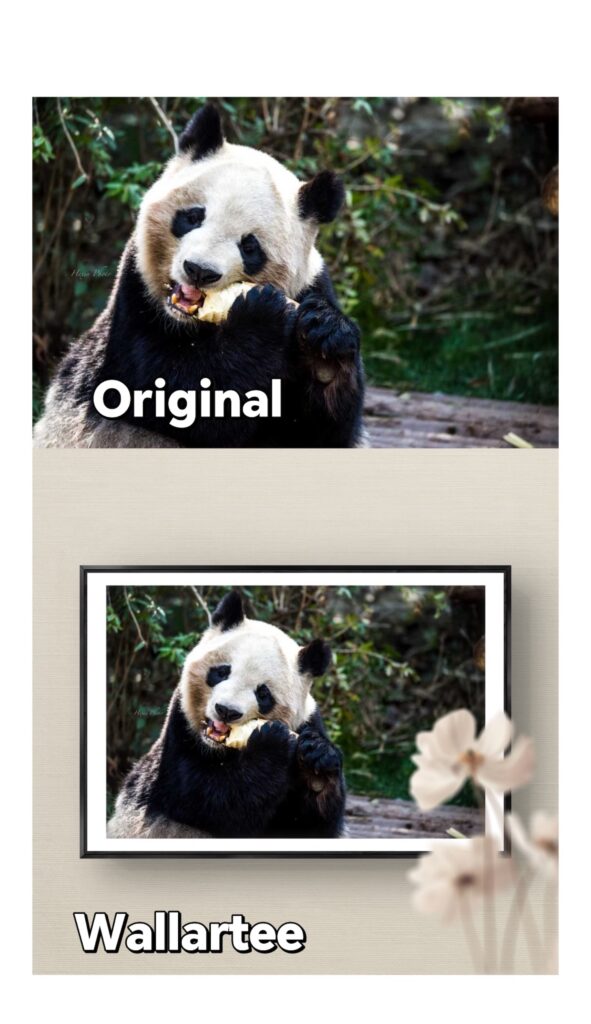
What Professional Art Presentation Actually Requires
If Canva is not built for artists, what is?
Professional art presentation typically includes:
Spatial Depth
Artwork should exist within an implied or simulated environment.
Even digital presentation benefits from:
- Subtle shadow logic
- Wall context
- Light direction
- Scale realism
These cues signal seriousness.
Proportion Preservation
Art must maintain:
- Original aspect ratio
- Authentic scale
- Visual breathing room
Templates optimize for symmetry.
Exhibition logic optimizes for authenticity.
Framing Systems
In traditional exhibitions, framing is not decorative. It is structural.
Digital presentation should replicate:
- Frame consistency
- Margin hierarchy
- Edge clarity
- Display balance
Without framing logic, presentation feels incomplete.
Portfolio Narrative
A professional art portfolio is not a collection of slides.
It is a curated sequence.
Presentation tools should allow:
- Thematic grouping
- Environmental consistency
- Controlled transitions
- Spatial coherence
Templates rarely consider this.
Is Canva Good for Art Portfolios?
This is the question many search:
“Is Canva good for art portfolios?”
The honest answer:
It depends on the goal.
If the goal is:
- Social promotion
- Quick digital sharing
- Informal online presence
Canva works well.
If the goal is:
- Professional exhibition
- Art school application
- Gallery presentation
- Collector-facing portfolio
Then Canva may feel limiting.
Not because it is weak.
But because it was not designed for exhibition logic.
The Rise of Art-Specific Presentation Platforms
As digital portfolios become more important, a new category is emerging:
Art presentation platforms.
Unlike graphic design tools, these platforms focus on:
- Exhibition-style display
- Realistic framing
- Spatial context simulation
- Portfolio environments
- Professional showcase structure
Instead of treating artwork as content inside a layout, they treat it as an object within a space.
This distinction defines the difference between marketing visuals and professional presentation.
A Better Alternative for Artists
If you are searching for a Canva alternative for artists, consider tools built specifically for art presentation rather than graphic templates.
Platforms like Wallartee are designed around:
- Exhibition logic
- Framing systems
- Spatial depth
- Portfolio storytelling
The goal is not decoration.
The goal is presence.
When presentation aligns with artistic intention, perception changes.
Collectors respond differently.
Galleries respond differently.
Audiences respond differently.
Because context shapes value.
Online Art Exhibition vs Graphic Templates
As more artists move online, the difference becomes clearer.
Graphic templates prioritize speed and visual clarity.
Online exhibition systems prioritize:
- Atmosphere
- Environment
- Display integrity
In the long term, artists who treat their digital presentation as an exhibition rather than a post build stronger professional identity.
Final Thoughts
Canva is powerful.
It is one of the best communication design tools available.
But not everything beautiful belongs in a template.
If you are an artist, your work is not a marketing graphic.
It is an object of meaning.
And objects of meaning deserve space.
Frequently Asked Questions
Is Canva good for artists?
Canva is excellent for marketing visuals and quick design tasks. However, it lacks the spatial context and exhibition logic required for professional art presentation.
What is the best Canva alternative for artists?
Artists often prefer platforms designed specifically for exhibition-style presentation rather than flat graphic templates.
How can artists present their work professionally online?
Professional online art presentation requires realistic framing, preserved proportions, spatial depth, and curated portfolio structure instead of generic templates.
Leave a Reply