Presenting artwork online is no longer just about uploading an image and hoping it looks good. For artists, the way a piece is shown can strongly influence how professional it feels, how clearly it communicates its value, and whether collectors or followers stop to pay attention.
If you want to know how to present artwork online, the answer usually comes down to five things: image quality, framing and display, context, consistency, and storytelling. When these elements work together, your art feels more polished, more intentional, and more ready to be taken seriously.
In this guide, we’ll walk through the most important ways to improve your online art presentation.
Why online presentation matters for artists
People usually see your work online before they ever see it in person. That means your presentation often becomes the first impression of your art.
A strong online presentation can help:
- make your work look more professional
- increase perceived value
- make your style feel more consistent
- improve engagement on social media
- help collectors imagine the work in their own space
- support portfolio, exhibition, and sales pages
Even excellent artwork can look weak online if it is shown with poor lighting, cluttered backgrounds, inconsistent sizing, or flat presentation.
1. Start with better artwork images
The foundation of online presentation is the image itself.
Before thinking about frames, mockups, or layouts, make sure the artwork image is clean and accurate. That means:
- the image should be sharp
- the colors should look close to the original work
- the lighting should be even
- the background should not distract from the artwork
- the edges of the piece should feel intentional and clean
If you are presenting paintings, illustrations, photography, or calligraphy, poor capture quality will immediately reduce the perceived professionalism of the work.
A simple rule: before you improve presentation, first remove distractions.
2. Use framing to make artwork feel more finished
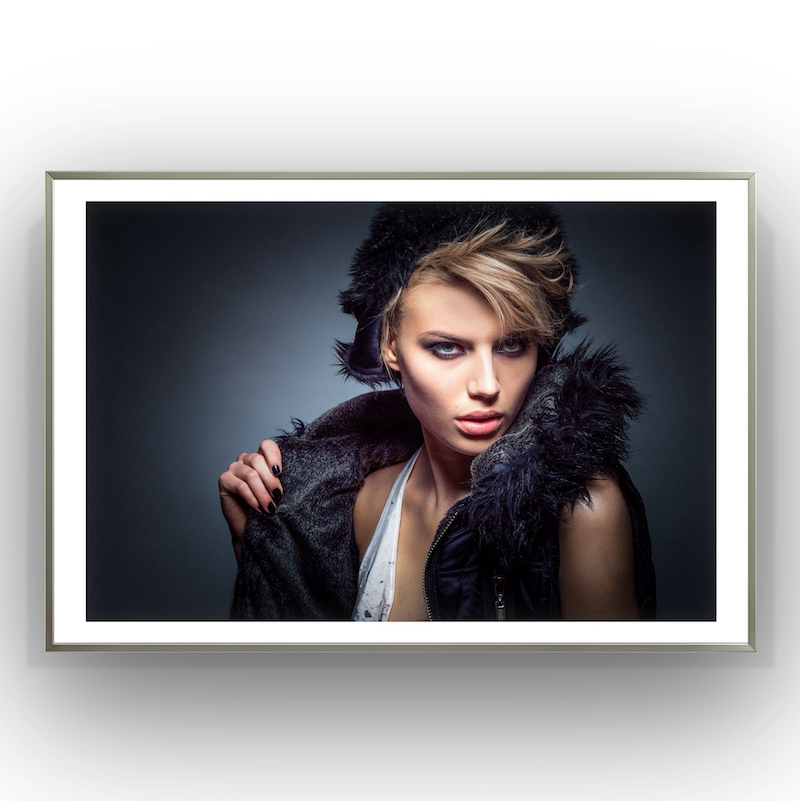
Framing changes how artwork is perceived. A framed piece usually feels more complete, more display-ready, and more valuable than a raw image alone.
This is especially useful online, where viewers need help imagining how the work would look in real life.
Framing can help:
- create a stronger first impression
- make the work feel gallery-ready
- match the piece to different interior styles
- increase the sense of craftsmanship and finish
For many artists, showing both the plain artwork and a framed version works better than showing only one.
3. Add real context, not just isolated images
A standalone artwork image is useful, but context often makes it more persuasive.
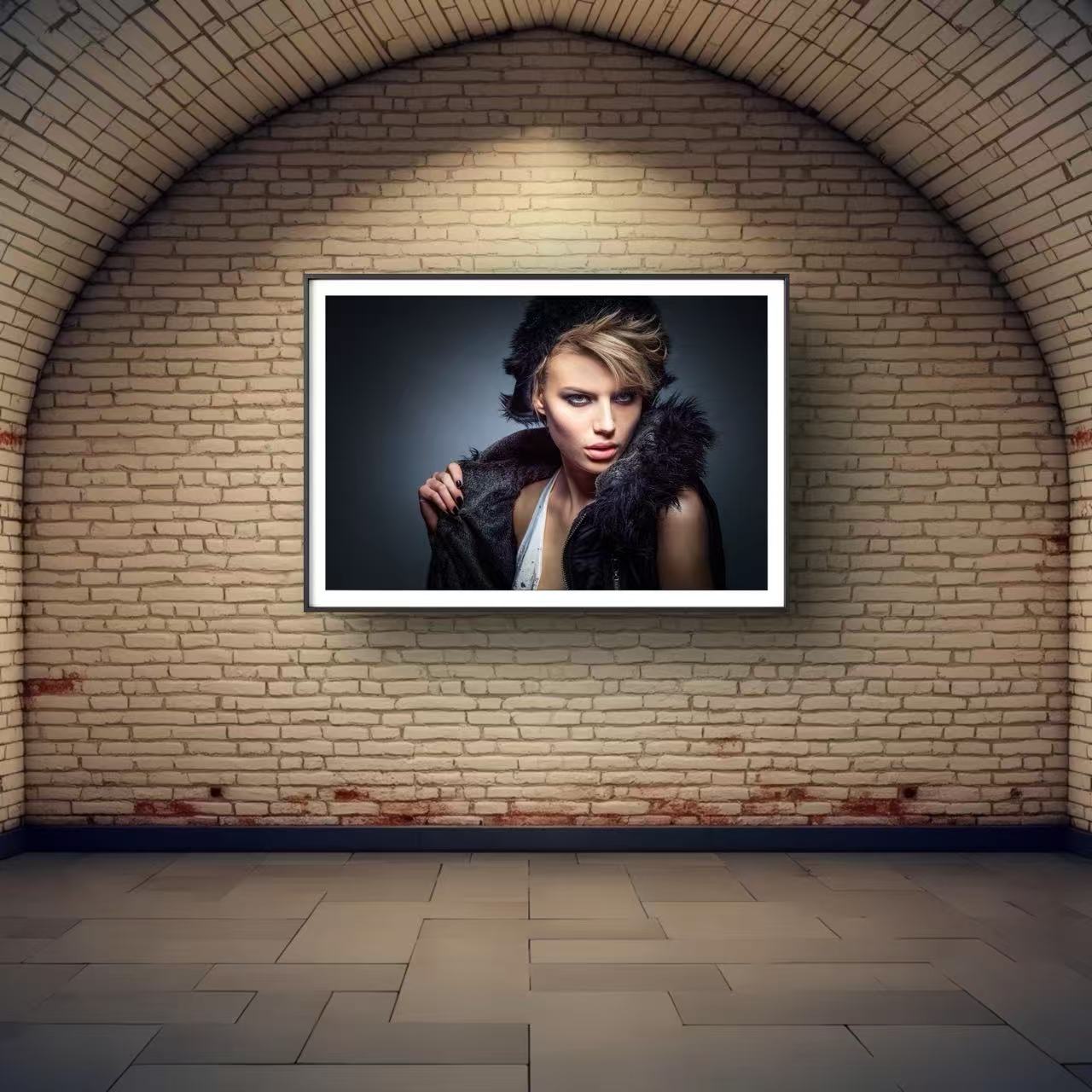
Collectors and followers want to imagine scale, mood, and placement. That is why artwork often performs better when it is also shown in a realistic setting, such as:
- on a wall
- above furniture
- in a clean gallery-like room
- as part of a portfolio page
- in a curated exhibition-style layout
Context helps answer the silent question people always have:
What would this look like in a real space?
That is one of the biggest gaps in weak online art presentation. The work may be good, but the viewer cannot imagine it living anywhere.
4. Keep your presentation style consistent
Consistency is one of the fastest ways to look more professional online.
If one image is dark, another is cropped badly, another uses a different background, and another uses a random mockup style, your overall presentation starts to feel messy even if each individual artwork is strong.
Try to keep these elements consistent:
- image ratio
- background treatment
- framing style
- typography on portfolio or promotional pages
- spacing and layout
- overall visual tone
This does not mean every artwork should look the same. It means your presentation system should feel intentional.
5. Show multiple views of the same artwork
One of the best ways to present artwork online is to show it in more than one form.
For example, you can show:
- the original flat artwork
- a framed version
- a room mockup
- a close-up detail
- a portfolio or exhibition page version
Each view answers a different question.
- The flat image shows the artwork clearly.
- The framed image makes it feel complete.
- The room mockup gives scale and context.
- The close-up shows texture and detail.
- The portfolio view helps the work feel curated.
This layered presentation often feels much stronger than relying on a single image.
6. Use portfolios instead of random uploads
Artists often post strong work online, but the overall impression still feels scattered. That usually happens because the work is being shown as isolated uploads instead of as part of a presentation system.
An online portfolio helps solve that.
A strong portfolio does not just collect artwork. It gives structure to your work through:
- consistent layout
- better sequencing
- artist information
- project grouping
- exhibition-style presentation
- a more deliberate visual identity
If you want your work to feel more serious, a portfolio usually helps more than a loose feed of disconnected images.
7. Help viewers understand scale
Scale is one of the hardest things to communicate online.
A painting, print, or photograph can look very different in real life than it does on a phone screen. Without visual clues, viewers may misunderstand its size, impact, or intended use.
To make scale clearer, you can show:
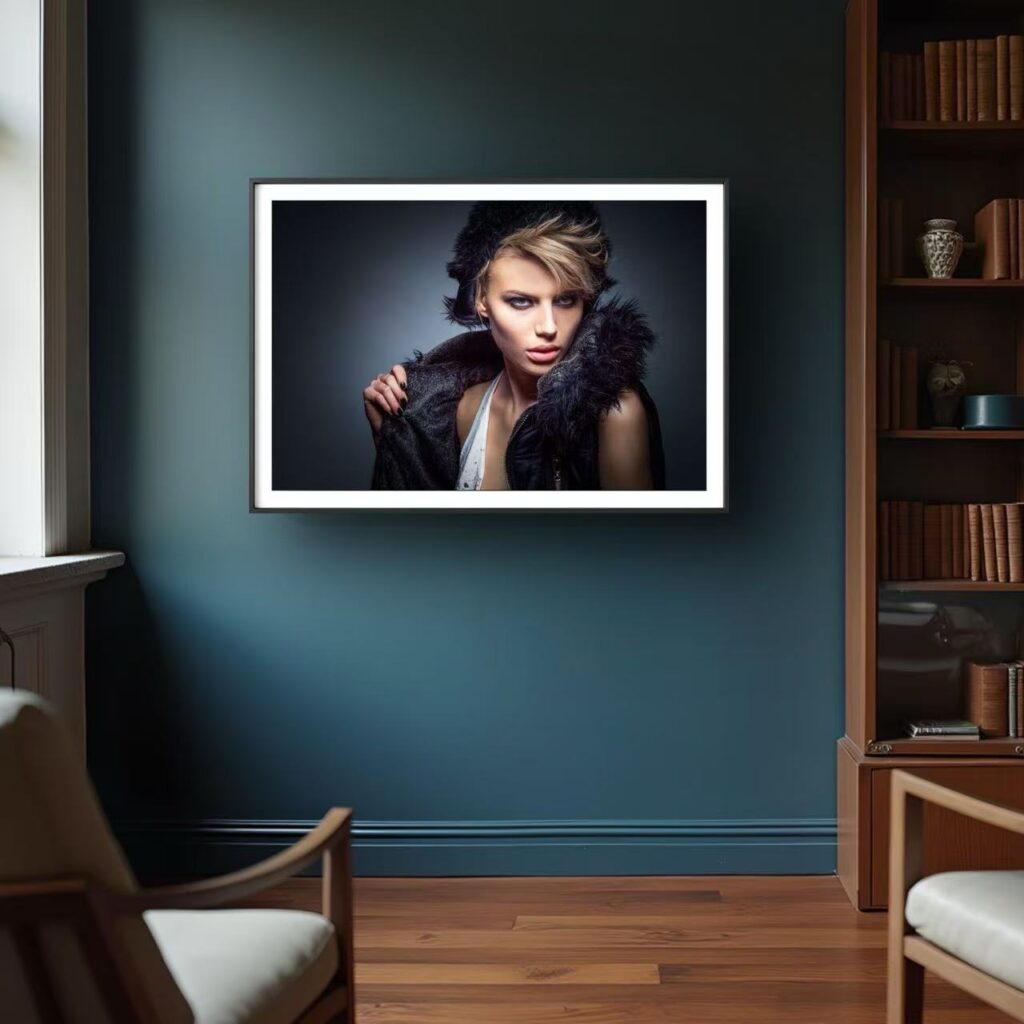
- the artwork in a room
- the piece above furniture
- multiple framed size options
- comparison layouts
- dimension information near the image
The easier it is for someone to imagine the artwork in space, the more convincing the presentation becomes.
8. Tell the story of the work
Presentation is not only visual. It is also narrative.
Even a short explanation can make the artwork feel more memorable and more meaningful. Depending on your style, this could include:
- title
- medium
- dimensions
- year
- short concept statement
- process notes
- inspiration
- edition details
You do not need to over-explain every piece. But some level of context usually helps the work feel more intentional and more complete.
9. Adapt the presentation to the platform
The best way to present artwork online depends partly on where it appears.
On your website
Your presentation should feel clean, curated, and stable. This is where portfolios, framed previews, and exhibition-like layouts work especially well.
On Instagram or Pinterest
You need stronger visual impact. Framed mockups, comparison views, before-and-after style presentation, and clear composition usually perform better than plain uploads.
On sales pages
Buyers want clarity. Show the artwork cleanly, then add framed views, room context, dimensions, and close-up detail.
On portfolio pages
Consistency matters most. The work should feel like part of a coherent artist identity.
10. Use tools that help you preview before publishing
A lot of weak art presentation happens because artists are guessing.
They do not know:
- which frame fits best
- whether a mat helps
- how the artwork looks in a room
- whether the portfolio layout feels polished
- which version looks strongest online
Preview tools make the decision process easier.
Wallartee helps artists present work more professionally by allowing them to test framed views, room mockups, and portfolio-style presentation before publishing. That makes it easier to choose a presentation that feels intentional instead of improvised.
Final thoughts
Learning how to present artwork online is not about decoration for its own sake. It is about helping the work appear as strong online as it feels in your mind.
The most effective online art presentation usually combines:
- clean artwork images
- thoughtful framing
- realistic context
- consistent visual style
- multiple presentation views
- strong portfolio structure
When those elements come together, your art feels more finished, more credible, and more ready to connect with viewers, collectors, and clients.
FAQ
What is the best way to present artwork online?
The best way is usually to combine clean artwork images with framed views, room context, and a consistent portfolio-style presentation.
Should artists show framed versions of their work online?
Yes. Framed versions often help artwork feel more complete and make it easier for buyers to imagine it in real space.
Why does my art look less impressive online than in person?
This often happens because of weak lighting, poor image quality, lack of context, inconsistent presentation, or flat uploads with no framing or display system.
Is a portfolio better than posting art randomly on social media?
Yes. A portfolio helps your work feel more structured, curated, and professional.
How can Wallartee help present artwork online?
Wallartee helps artists preview framed artwork, room mockups, and portfolio-style presentation so their work looks more polished before publishing.
Leave a Reply